 ENG
ENG RUS
RUS


@NewsletterCategoriesInterview
Maurice Daniels, Area Manager at CPM Europe B.V.

The Russian government is introduced a State plan of the bioenergy sector development

Mr. Matti Lehmus, Executive Vice President, Oil Products and Renewables, Neste Oil, Finland: “Biofuel is the aviation future”
DocumentsStandardsQuotations |
Wood Pellet Association of Canada: Industry to assess torrefied pellet productionTo have access to all news, please, register.
10 November 2010, 03:11
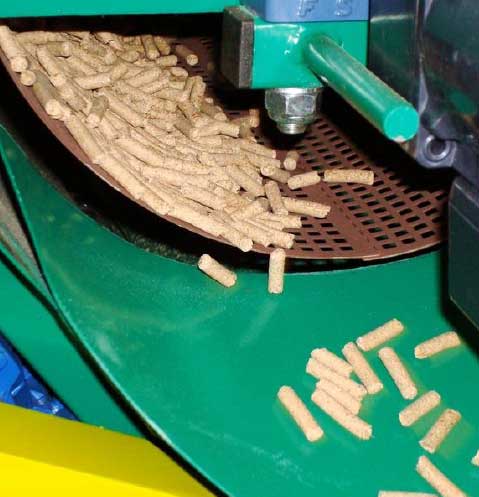
The BC Bioenergy Network and the Wood Pellet Association of Canada (WPAC) are assessing the feasibility of a pilot plant to produce torrefied pellets from wood waste at a commercial scale. Torrefaction involves a thermo-chemical conversion of biomass at 200–320ºC in an oxygen-starved environment, removing water and combustible gases and leaving a black, energy-dense wood product. The energy density of torrefied pellets is 22 to 24% higher than that of regular wood pellets, resulting in a 40 to 50% reduction in transportation and storage costs. Torrefied pellets are also water-repellent, are said to decrease fire risks in transportation and storage by generating less dust, and can be made from a wide range of raw biomass feedstocks. They are also practical for use in coal-fired power stations. Torrefaction technology has been tested successfully in laboratory conditions. The BC Bioenergy Network and WPAC are now funding a $170,000 engineering study to determine if the technology is feasible on a commercial scale. “Torrefaction is one of the most promising new technology applications for use in bioenergy,” says BC Bioenergy Network executive director Michael Weedon. “Indications are that it will substantially improve the economics of wood pellet applications and accelerate replacement of fossil fuel-based coal with a more sustainable fuel source.” “A successful pilot plant would lead to widespread deployment of torrefaction technology by the entire Canadian pellet industry,” says Gordon Murray, executive director of WPAC. “This would give our producers a significant advantage in an increasingly competitive global market.” The feasibility study is expected to be complete in late fall 2010. The BC Bioenergy Network and WPAC will review and analyze the results in conjunction with the British Columbia Ministry of Forests and Range and Ministry of Energy, Mines, and Petroleum Resources. Funding possibilities for a pilot plant will be explored if the study determines that torrefaction technology is commercially feasible.
Read also
 .jpg)
|
AuthorizationNoveltyINFOBIO digestContactsE-mail: info@infobio.ru
Advertisement
КОНГРЕСС ЭНЕРГИЯ ИЗ БИОМАССЫ 2018 |
(1).jpg)


















Copyright © 2010 The news agency INFOBIO and The International Bioenergy. Russia magazine. All rights reserved.
.jpg)

Please send your questions and comments to info@infobio.ru.Detailes of copyright protection and placement of advertisements info@infobio.ru. The active link to www.infobio.ru is required.
© 2010 Разработка сайта
